
Costa de la Luz guide
Costa de la Luz holidays: the coast, the seasons, and the Algarve next door
Spain’s Atlantic coast runs from the Portuguese border to Tarifa. We have spent our summers on the Huelva end of it since 1998, an hour from Faro, and this is how it compares with the Algarve across the river.
Where is the Costa de la Luz?
It is the Atlantic coast of Andalucía, in two provinces. The Huelva half runs from the Guadiana, the river that marks the border with Portugal, to the Guadalquivir and Doñana. The Cádiz half carries on south past Cádiz city to Tarifa, the southern tip of mainland Europe.
It is not the Costa del Sol. That is the Mediterranean coast around Málaga, with warmer water, more high rise resorts and a different airport.
The Huelva coast, where our villa is
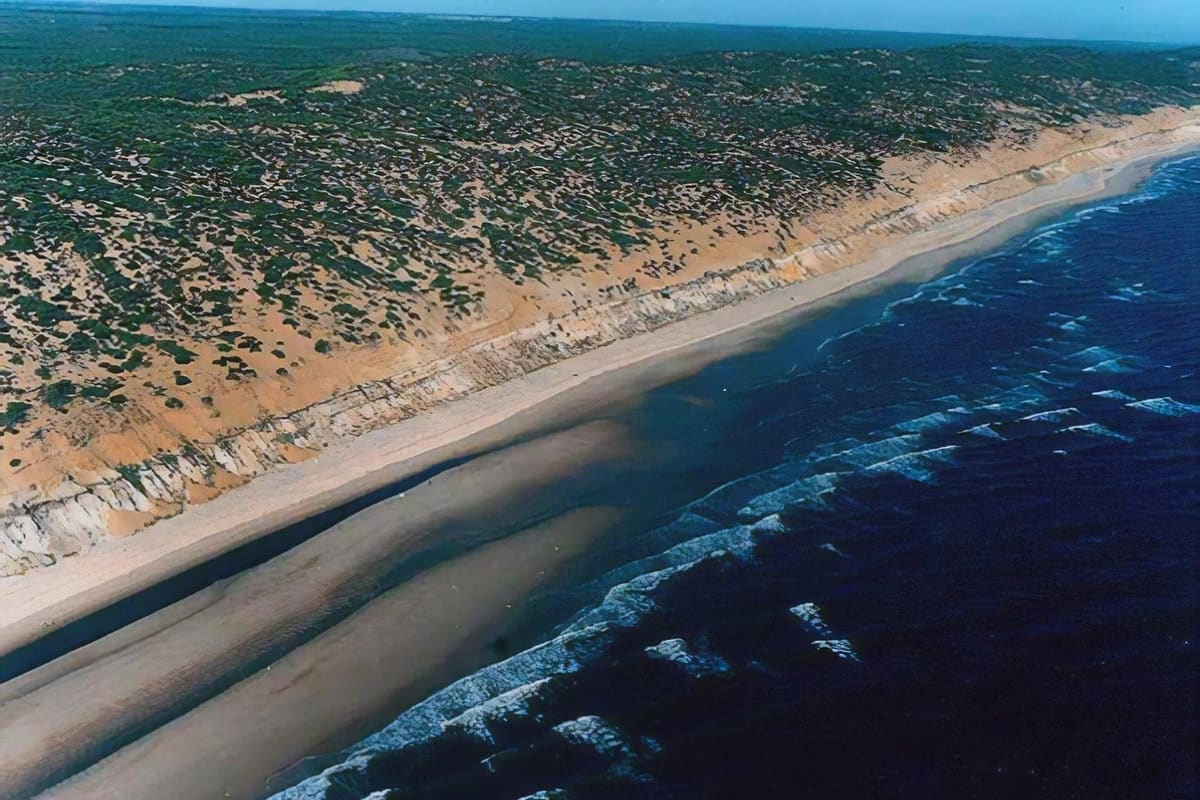
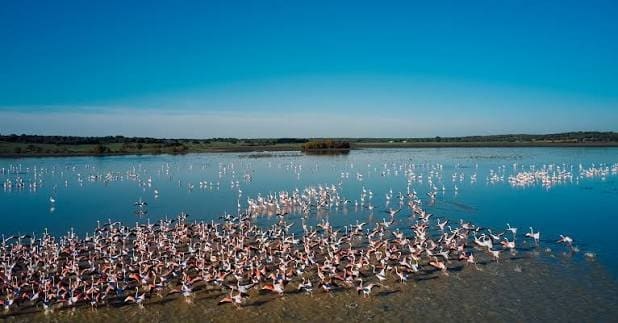
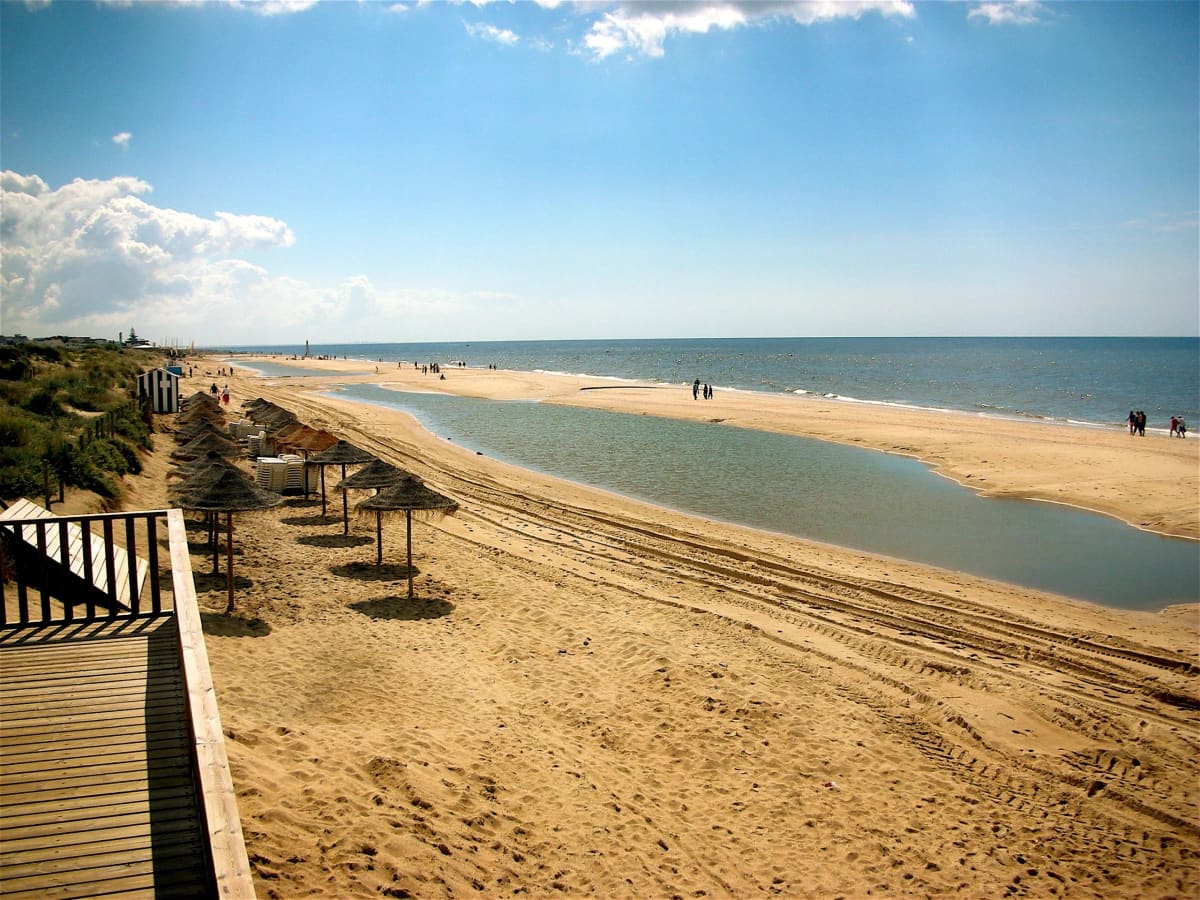
Long, straight beaches of pale sand, backed by dunes and pine woods. Towns are small and spread out: Ayamonte on the river, Isla Cristina with its fishing port, Islantilla and La Antilla, El Rompido, Punta Umbría and Mazagón. At the far end is Doñana National Park, wetlands that are home to flamingos and a stop for migrating birds.
In our experience it is Spanish families who fill the beach towns in July and August; outside those months the coast is quiet. Our guide to the beaches of Huelva has drive times for each one.
The Cádiz coast, further south
Cádiz city, the white town of Vejer, and beach villages such as Conil, Zahara de los Atunes and Bolonia, where Roman ruins sit behind the dunes. Tarifa, at the end, is Europe’s best known spot for windsurfing and kitesurfing, because the strong easterly levante wind blows through the Strait of Gibraltar.
From our villa, Cádiz city is about 250 km away, two and a half to three hours by car. It makes a trip of its own rather than a day out.
The Costa de la Luz with children
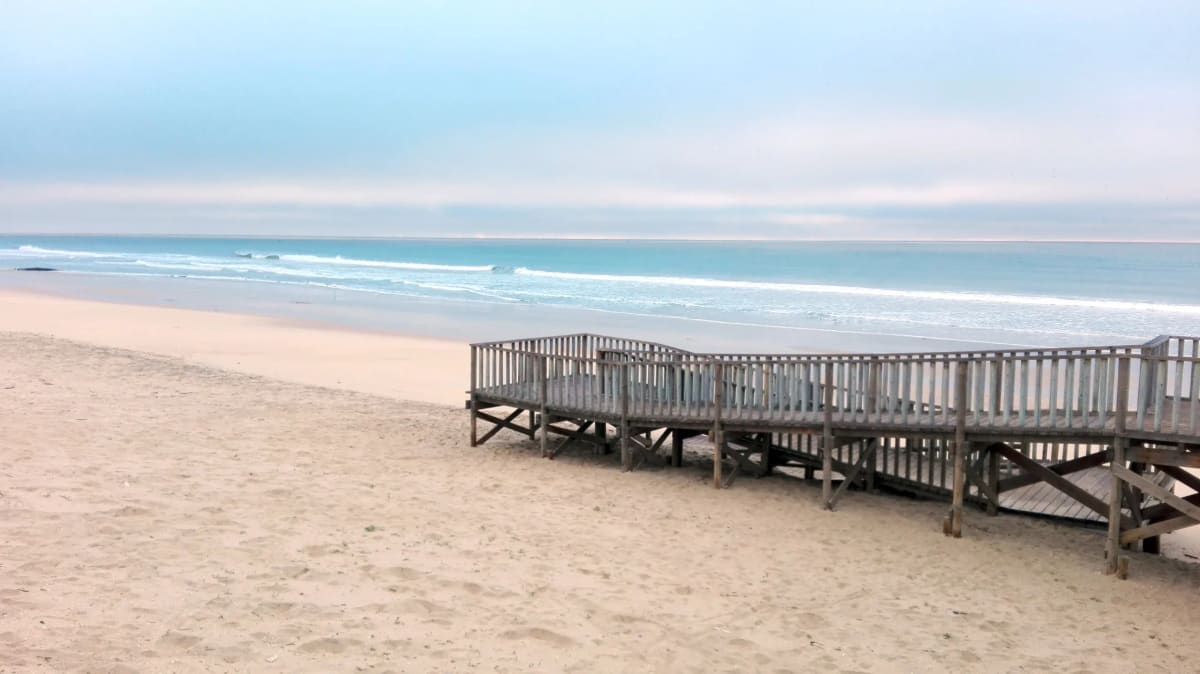
The Huelva beaches are wide and sandy, with no rocks to climb over, and at low tide shallow pools form at the water’s edge. In summer the Blue Flag beaches have lifeguards. The Atlantic still has tides and currents, so watch the flags.
For days out there is the Aquashow water park in the Algarve, Isla Mágica in Seville, and boat or four wheel drive tours in Doñana. Dinner is late in Spain, so with young children it is often easier to cook at the villa in the evening and eat out at lunch.
Sea and air temperatures by month
Averages for Isla Cristina, next to Islantilla, rounded to the nearest degree. The sea is warm enough for most swimmers from June to October; outside those months our pool can be heated on request.
| Month | Sea | Daytime high |
|---|---|---|
| March | 15 °C | 19 °C |
| April | 16 °C | 21 °C |
| May | 18 °C | 24 °C |
| June | 20 °C | 27 °C |
| July | 22 °C | 31 °C |
| August | 22 °C | 31 °C |
| September | 22 °C | 28 °C |
| October | 21 °C | 24 °C |
| November | 18 °C | 20 °C |
Costa de la Luz or the Algarve?
The two coasts face the same ocean and share Faro airport, so the weather and the sea are much the same. The difference is the shape of the coast and how busy it gets.
| Huelva coast | Algarve | |
|---|---|---|
| Beaches | Long straight beaches with dunes and pine woods | Limestone cliffs and coves in the west and centre; sand islands reached by ferry in the east |
| Sea in August | About 22 °C at Isla Cristina | About 21 °C at Albufeira |
| Summer crowds | Busiest in July and August | Albufeira is one of the busiest resorts, packed in July and August |
| Time zone | Central European Time | One hour behind Spain |
| Faro airport | About 1 hour to Islantilla | In the middle of the coast |
| Day trips | Seville, Doñana, and the Algarve over the bridge | Lagos and the cliffs, the Ria Formosa, Seville is further |
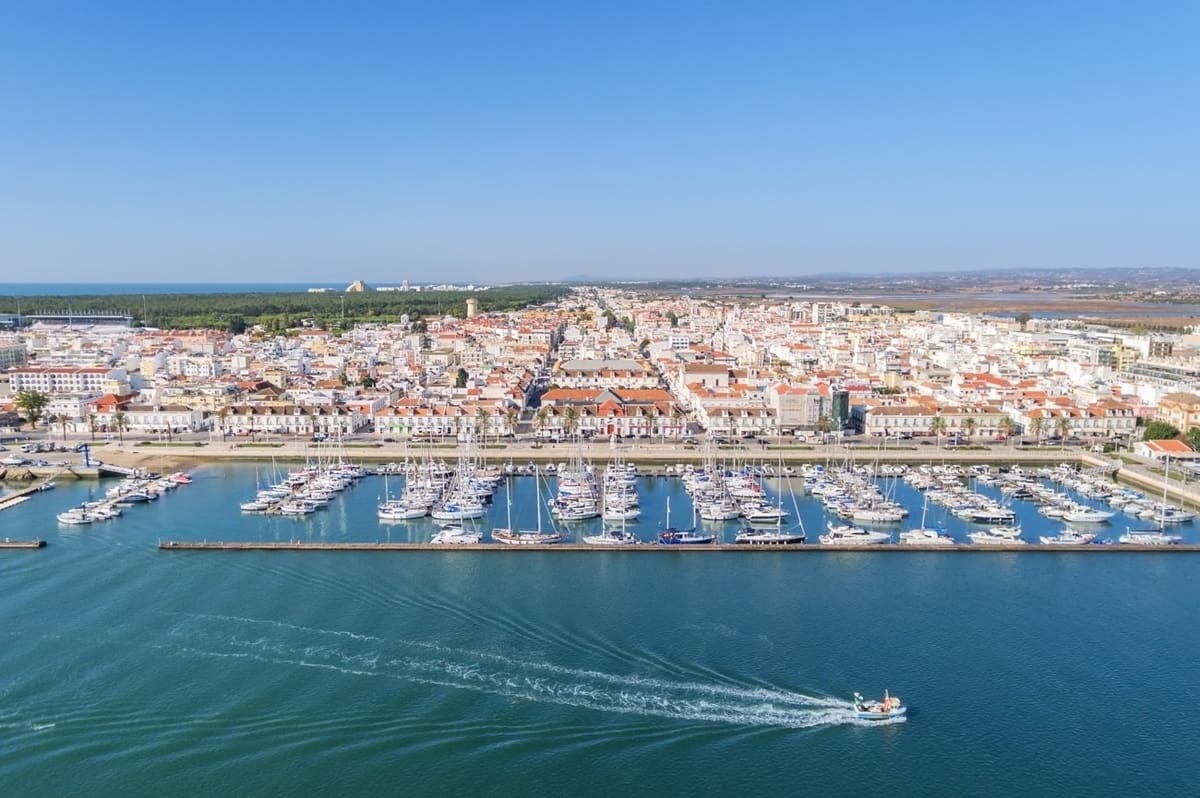
If cliffs, caves and boat trips are what you are after, base yourself in the western Algarve. If you want space on the sand, quieter towns and Seville within reach, the Huelva coast suits you better.
From Islantilla you get some of both. Tavira and the Ria Formosa are about 50 minutes away, Albufeira about an hour and a quarter, and Lagos about two hours.
More from our guides
Beaches
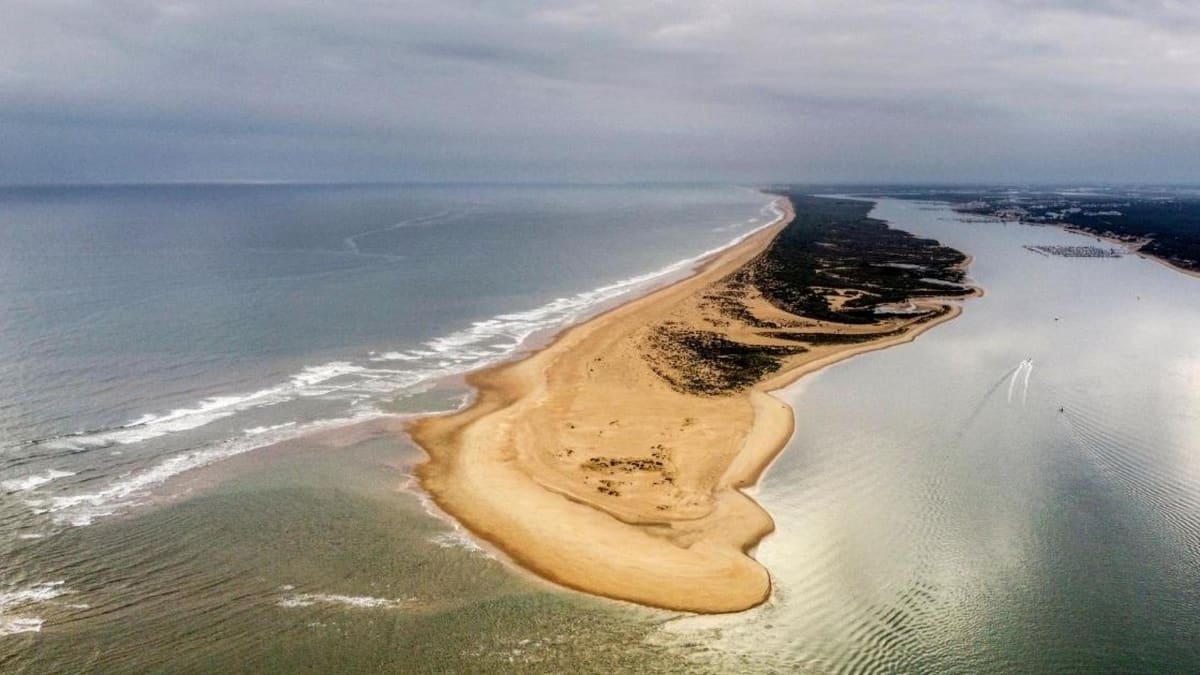
The beaches of Huelva from our gate to Doñana, with the Blue Flags for 2026.
Blue Flags and wild beaches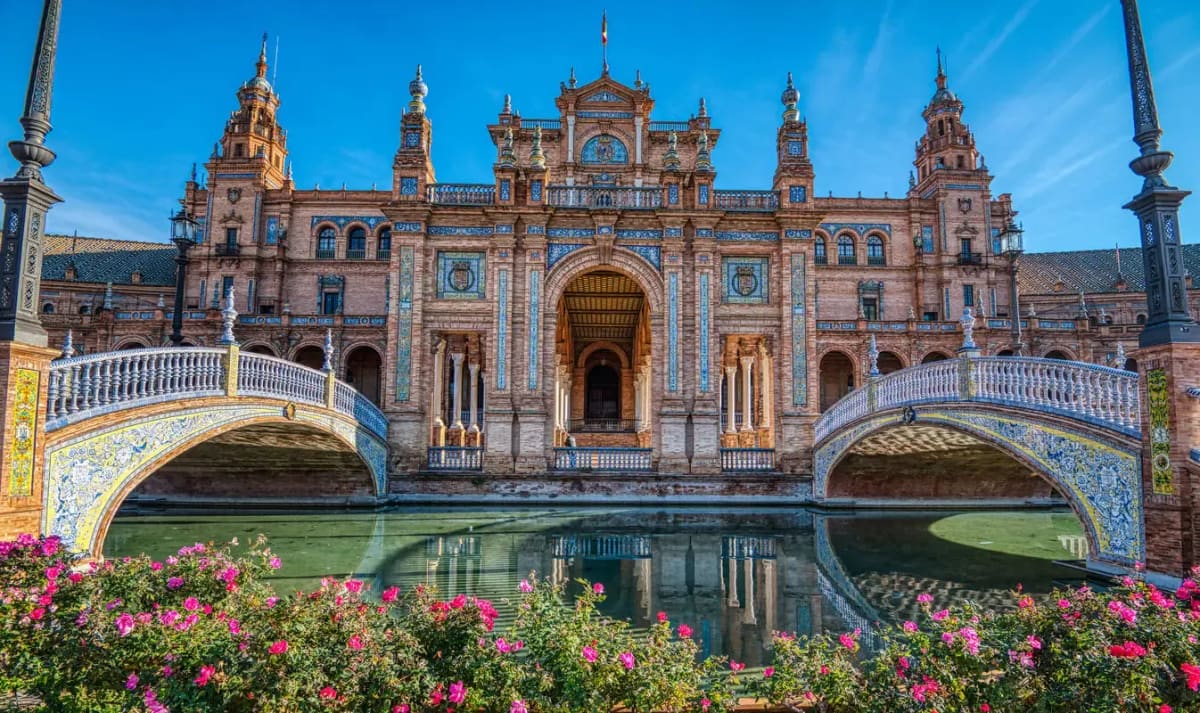
Things to do
Things to do in Islantilla with children, and day trips to Seville, Doñana and Portugal.
With kids, and day trips
Islantilla guide
Islantilla itself: the beach, the promenade, the golf course and Urbasur.
Beach and area guideQuestions
Where is the Costa de la Luz?
On the Atlantic coast of Andalucía in southern Spain, from the Portuguese border at Ayamonte to Tarifa, across the provinces of Huelva and Cádiz.
Is the Costa de la Luz good for families?
Yes. The beaches in Huelva are wide and sandy, many have lifeguards in summer, and the towns are small. Watch the tides and currents, as on any Atlantic beach.
Is the sea warm on the Costa de la Luz?
Warm enough for most swimmers from June to October. Off Isla Cristina it averages about 20 °C in June and 22 °C in August, cooler than the Mediterranean.
Which airport is closest to the Costa de la Luz?
For the Huelva coast, Faro is usually easiest: about an hour from Islantilla. Seville is about an hour and a half. For the Cádiz coast, Jerez and Seville are closer.
Is the Costa de la Luz or the Algarve better?
They share the same ocean and climate. The Algarve has cliffs, coves and busier resorts; the Huelva coast has long sandy beaches, dunes and quieter towns, with Seville and Doñana close by.
Stay on the Huelva side of the Costa de la Luz
Villa La Caleta sleeps 10 in Islantilla, three minutes from the beach and an hour from Faro, with a private pool heated on request.